Where the Line Lands
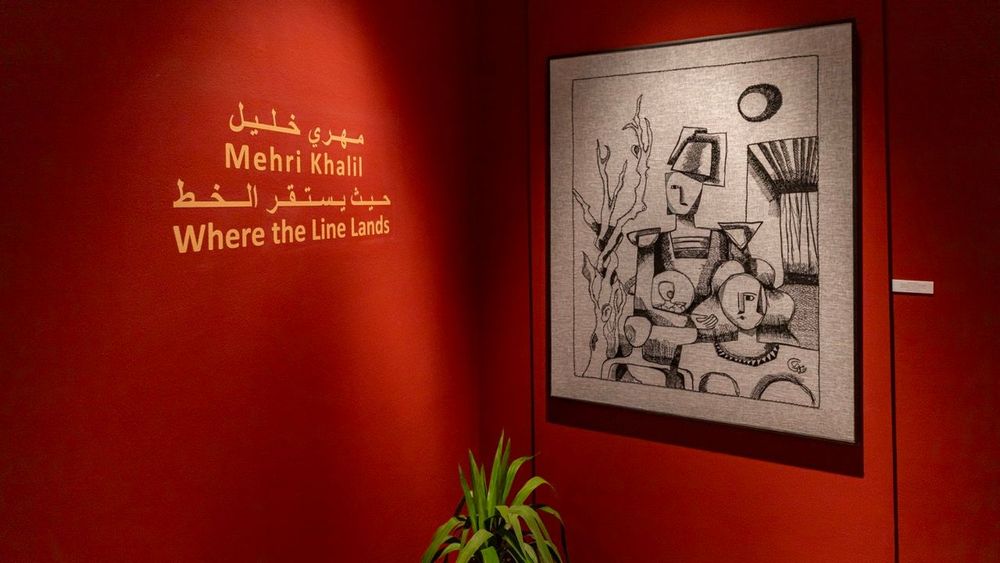
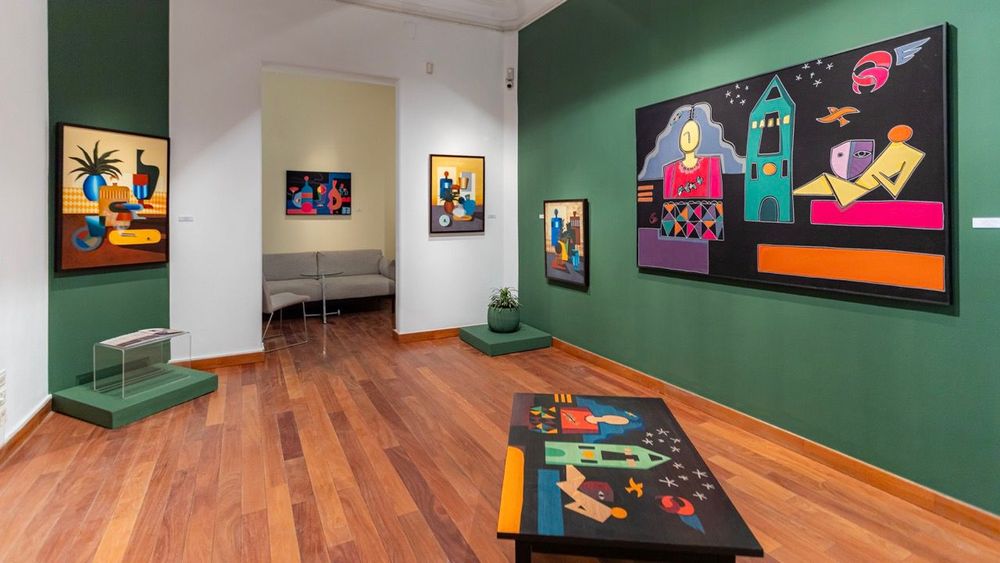
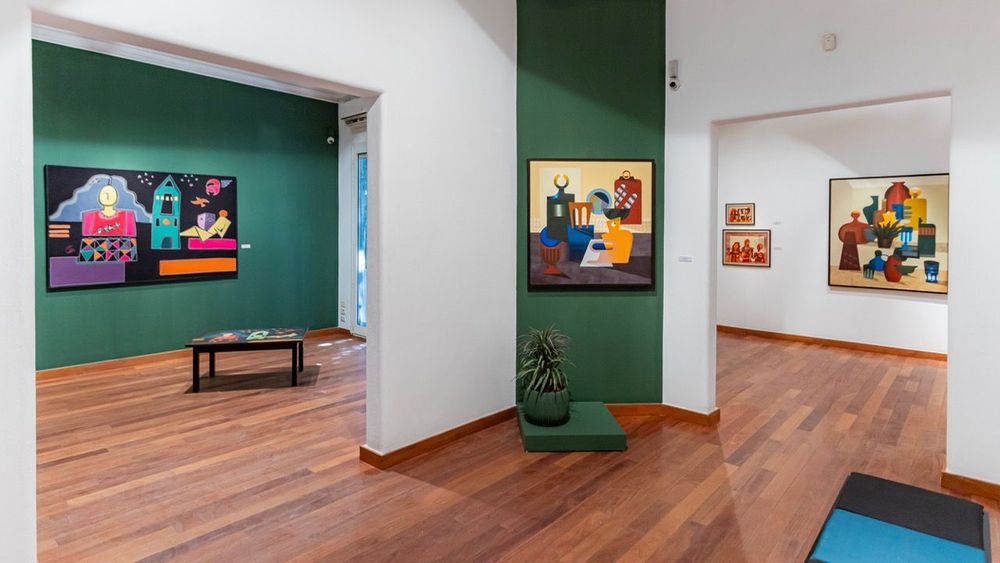
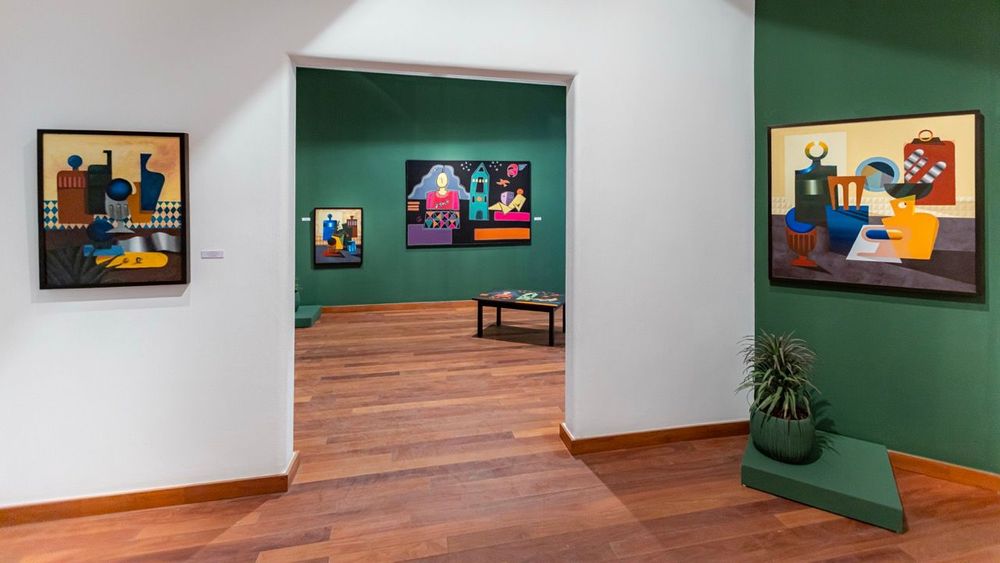
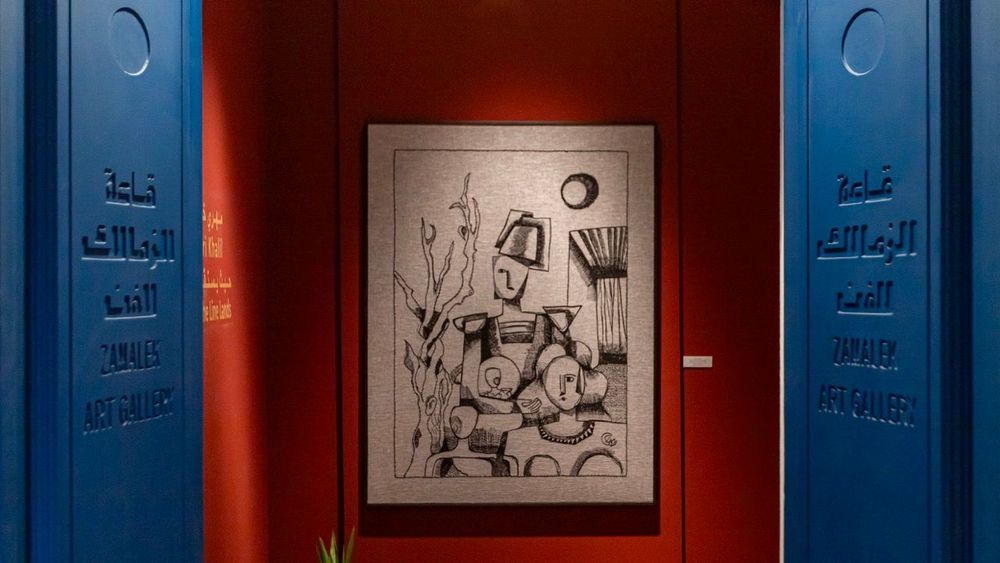
The exhibition “Where the Line Lands” by artist Mehri Khalil comes seven years after her last solo show. It does not simply mark a return to exhibiting; rather, it appears as a quiet moment of crystallization within a long journey of research and experimentation. Throughout these years, the artist never ceased practicing art. Instead, she devoted herself to developing her visual language through a continuous engagement with drawing and painting, particularly through small sketches on paper. This period allowed her artistic vision to grow gradually and thoughtfully, away from the pressures of public exhibiting. In this exhibition, we see how Mehri employs the line as a constructive element within the visual composition, transforming it into a means of reconstructing the surrounding reality in her own distinctive way. In Mehri’s work, the line reorganizes relations between objects, turning the painting into a space where masses and voids enter into dialogue, and where elements are reformulated through a geometric system. Geometry in her work is not merely a method for organizing visual space; it is a universal language that the artist employs as a measured and stable framework through which she seeks the essence of things. At the same time, geometry offers her a sense of stability in a world marked by uncertainty and instability. Those who know of the evolution of Mehri Khalil’s artistic practice during these years may notice a clear shift in the presence of the human figure within her compositions. In earlier phases, figures were more prominently present. Gradually, however, these figures began to recede, replaced by silent elements and distilled compositions. Khalil treats people and objects with the same level of presence: still-life elements acquire a distinctly human character within her artistic world. For her, “objects” become almost like “persons,” while faces withdraw or fragment, becoming part of the overall structure of the painting. This transformation does not signify the absence of the human presence so much as it indicates a shift of attention—from the external appearance of the form toward the exploration of the essence of form itself. As a result, her works move beyond conventional boundaries between portraiture, still life, and landscape. The painting becomes a space in which ideas and visions intersect, or crystallizes as a state of deep contemplation. This development cannot be read separately from the artist’s recent experience working with artistic archives. Through direct engagement with artists’ documents, works, and photographs, she was able to reflect more deeply on the history of modern Egyptian art. While this experience does not appear directly within her works, it has deepened her sense of continuity within this history and expanded her awareness of the subtle connections linking artistic experiences across time. This research path culminated in her doctoral studies on cross-cultural influences in modern Egyptian art, which she completed at the Academy of Fine Arts in Vienna, Austria, in 2025. Mehri’s artistic vision is also closely tied to a broader reflection on identity. For her, identity is not a fixed structure but one that forms through layered intersections of time and place. Within this context, her works—through their reliance on geometric structures—appear as a bridge connecting contemporary experience with long-standing visual traditions within Egyptian culture, beginning with ancient Egypt. The geometric forms she employs extend beyond the idea of abstraction, with roots that reach into architecture, ornamentation, and traditional crafts. This connection is particularly evident in her engagement with the art of khayamiya (Egyptian appliqué textile). What began as small sketches eventually transformed into khayamiya works produced in collaboration with specialized artisans. Mehri approached khayamiya as a living material of heritage—a living practice grounded in rhythm and craftsmanship. Through collaboration with khayamiya artisans, her drawings were translated into a textile structure based on the accumulation of fabric pieces and threads, echoing the constructive nature of her geometric compositions. Yet this collaboration also introduced an additional space of freedom: working with artisans on the same surface opened new expressive possibilities. This can be seen in the introduction of colors that had not previously been central to her work—such as red, blue, and pink—which appear with greater clarity and boldness within the textile compositions. At the same time, human figures return with renewed vitality within this khayamiya series. This dialogue with material extends further into other experiments the artist has pursued in recent years with a variety of mediums, including wood. In these works, the wooden surface no longer functions merely as a support for painting or as a frame; instead, it becomes an integral component of the artwork itself. The material thus transforms into a semantic element, adding layers of texture, memory, and history to the work. All these works, gathered within the exhibition “Where the Line Lands,” invite the viewer to accompany Mehri on her journey across seven years leading to the present moment. At the same time, this body of work reveals a rich awareness of Egyptian visual heritage—not as a fixed reference, but as a field open to reinterpretation within a contemporary vision. Through the interaction between artistic research, craftsmanship, and experimentation with materials, Mehri Khalil continues to construct her own distinct world—one grounded in geometry and reduction, and in the ongoing pursuit of visual balance that grants the work a sense of stillness and inner depth. Mona Abdel Karim
March 29 — April 12, 2026
Curatorial Statement
The exhibition “Where the Line Lands” by artist Mehri Khalil comes seven years after her last solo show. It does not simply mark a return to exhibiting; rather, it appears as a quiet moment of crystallization within a long journey of research and experimentation. Throughout these years, the artist never ceased practicing art. Instead, she devoted herself to developing her visual language through a continuous engagement with drawing and painting, particularly through small sketches on paper. This period allowed her artistic vision to grow gradually and thoughtfully, away from the pressures of public exhibiting. In this exhibition, we see how Mehri employs the line as a constructive element within the visual composition, transforming it into a means of reconstructing the surrounding reality in her own distinctive way. In Mehri’s work, the line reorganizes relations between objects, turning the painting into a space where masses and voids enter into dialogue, and where elements are reformulated through a geometric system. Geometry in her work is not merely a method for organizing visual space; it is a universal language that the artist employs as a measured and stable framework through which she seeks the essence of things. At the same time, geometry offers her a sense of stability in a world marked by uncertainty and instability. Those who know of the evolution of Mehri Khalil’s artistic practice during these years may notice a clear shift in the presence of the human figure within her compositions. In earlier phases, figures were more prominently present. Gradually, however, these figures began to recede, replaced by silent elements and distilled compositions. Khalil treats people and objects with the same level of presence: still-life elements acquire a distinctly human character within her artistic world. For her, “objects” become almost like “persons,” while faces withdraw or fragment, becoming part of the overall structure of the painting. This transformation does not signify the absence of the human presence so much as it indicates a shift of attention—from the external appearance of the form toward the exploration of the essence of form itself. As a result, her works move beyond conventional boundaries between portraiture, still life, and landscape. The painting becomes a space in which ideas and visions intersect, or crystallizes as a state of deep contemplation. This development cannot be read separately from the artist’s recent experience working with artistic archives. Through direct engagement with artists’ documents, works, and photographs, she was able to reflect more deeply on the history of modern Egyptian art. While this experience does not appear directly within her works, it has deepened her sense of continuity within this history and expanded her awareness of the subtle connections linking artistic experiences across time. This research path culminated in her doctoral studies on cross-cultural influences in modern Egyptian art, which she completed at the Academy of Fine Arts in Vienna, Austria, in 2025. Mehri’s artistic vision is also closely tied to a broader reflection on identity. For her, identity is not a fixed structure but one that forms through layered intersections of time and place. Within this context, her works—through their reliance on geometric structures—appear as a bridge connecting contemporary experience with long-standing visual traditions within Egyptian culture, beginning with ancient Egypt. The geometric forms she employs extend beyond the idea of abstraction, with roots that reach into architecture, ornamentation, and traditional crafts. This connection is particularly evident in her engagement with the art of khayamiya (Egyptian appliqué textile). What began as small sketches eventually transformed into khayamiya works produced in collaboration with specialized artisans. Mehri approached khayamiya as a living material of heritage—a living practice grounded in rhythm and craftsmanship. Through collaboration with khayamiya artisans, her drawings were translated into a textile structure based on the accumulation of fabric pieces and threads, echoing the constructive nature of her geometric compositions. Yet this collaboration also introduced an additional space of freedom: working with artisans on the same surface opened new expressive possibilities. This can be seen in the introduction of colors that had not previously been central to her work—such as red, blue, and pink—which appear with greater clarity and boldness within the textile compositions. At the same time, human figures return with renewed vitality within this khayamiya series. This dialogue with material extends further into other experiments the artist has pursued in recent years with a variety of mediums, including wood. In these works, the wooden surface no longer functions merely as a support for painting or as a frame; instead, it becomes an integral component of the artwork itself. The material thus transforms into a semantic element, adding layers of texture, memory, and history to the work. All these works, gathered within the exhibition “Where the Line Lands,” invite the viewer to accompany Mehri on her journey across seven years leading to the present moment. At the same time, this body of work reveals a rich awareness of Egyptian visual heritage—not as a fixed reference, but as a field open to reinterpretation within a contemporary vision. Through the interaction between artistic research, craftsmanship, and experimentation with materials, Mehri Khalil continues to construct her own distinct world—one grounded in geometry and reduction, and in the ongoing pursuit of visual balance that grants the work a sense of stillness and inner depth. Mona Abdel Karim
Exhibition Details
Status
PAST
Duration
14 DAYS
Participating Artists
1
Featured Works
56
Installation Views
Inquire About This Exhibition
For additional information, private viewing appointments, or inquiries about available works, please contact our gallery team.