Mariam Abdel Aleem
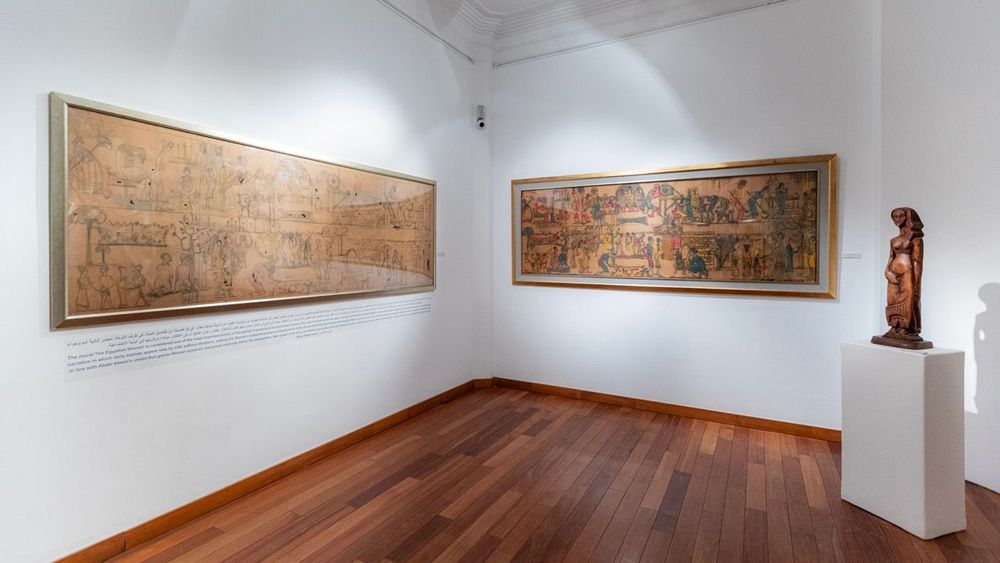
Through an exceptional artistic journey that extended for more than half a century, Mariam Abdel Aleem succeeded in transforming graphic art in Egypt from a purely reproductive printing medium into a comprehensive visual language capable of embracing the details of everyday Egyptian life, social transformations, and human emotions. Alongside her pioneering role as an artist, Abdel Aleem was an inspiring professor who left a profound impact on successive generations of students in the Graphic Department at the Faculty of Fine Arts in Alexandria. She did not merely transmit the latest printing techniques and methods; she instilled in her students a spirit of boldness, a love of materials, and faith in experimentation as the essence of the creative process. Despite her stature, her personality was marked by a clear modesty toward the spotlight; her focus remained directed toward the essence of artistic work rather than its media or celebratory presence. Her creative output continued until the very last moments of her life; she passed away while the colors of her final paintings had not yet dried on her fingertips, leaving behind a vast artistic legacy that placed her among the most important visual artists in Egypt. This was expressed by Dr. Salah El-Meligy, who described her as “a luminous sign in the record of Egypt’s creators,” noting that her works over many decades represented a true qualitative leap in graphic art. She liberated it from the prevailing traditional molds and developed a new and daring visual language through which she continued to explore and expand the printed medium, enabling her to move within more liberated spaces—enriched by her unique talents and fertile imagination—so that her works became aligned with her pure spirit, sincere and expressive of her human and artistic character. The mural The Egyptian Woman (84 cm × 2.5 m) is considered one of the most important works of this period. It presents a rich panoramic vision of the role of women across the ages, in a style reminiscent of ancient Egyptian murals. Abdel Aleem transformed the pictorial space into a continuous visual narrative in which daily scenes appear side by side without divisions, making the Woman a collective presence in every detail of life. At one end of the mural appears the duality of Adam and Eve as the origin of the human story; however, Adam’s presence is marginal compared to Eve’s, in line with Abdel Aleem’s vision that grants Woman symbolic and actual centrality within the composition. Man is part of the story, but Woman carries its continuity. Woman is active—grinding, spinning, cooking, and caring for children—affirming her centrality in the social structure. The horizontal dimension of the mural conveys a sense of movement, time, and continuity—an idea that preoccupied Abdel Aleem for a long time. The wheel motif recurs in many of her works, whether as the wheel of daily life or, in the Industrial Revolution series, as a gear form. This work was executed using silk-screen printing, and she was the first to introduce silk-screen printing into artistic practice in Faculties of Fine Arts after her return from her scholarship in 1959. She contributed to establishing the Printmaking Department at the Faculty of Fine Arts in Alexandria and founded a distinctive artistic school, as recounted by her daughter, the artist Zeinab El-Demerdash. She relied on large printed areas reaching two meters or more, at a time when traditional academic schools favored small formats—a direction inspired by her American experience. She also introduced relief printing into Egyptian art faculties for the first time using large-scale wooden blocks. The techniques she employed throughout her artistic experiments varied between lithography, silkscreen, linocut, relief and intaglio printing, in addition to mixed media, collage, and photo-sensitization. She excelled in combining more than one technique within a single work, achieving visual harmony between texture and symbol. Under the title “The Form of Meaning,” Mokhtar El-Attar wrote about the uniqueness of Abdel Aleem’s graphic experience in Al-Musawwar: “She had to ‘rationalize’ graphic formulation methods at the Faculty of Fine Arts… She introduced new means, combining silkscreen printing with photo-sensitization. She created zinc plates after cutting them into multiple parts, engraving them sometimes in intaglio and sometimes in relief, to avoid the appearance of an illusory line separating the drawn elements… This granted her creativity a realistic and poetic flavor—felt but unseen. Thus, craftsmanship served to perfect the formulation of meaning, not craftsmanship for its own sake.” Her works passed through thematic stages that paralleled transformations in Egypt and the Arab region, including a phase of social documentation and the Industrial Revolution during the era of Gamal Abdel Nasser. She depicted scenes from popular life such as the watermelon seller, the licorice seller, and secondary-school girls. She once spoke about the diversity of her subjects: “The surrounding events had a great effect on shaping them. From these events came the stages that began with my influence by the Egyptian street and what it contains of carts, humans, animals, and the wheel of life—from morning to evening. Thus, the wheel played a major role in building my works during the first half of the 1960s and then the second half, followed by political events from the industrial revolution to women entering elections and joining the political field, then Post -6-Day-War (June of 1967). Despite obtaining her PhD from the University of California, her attachment to Egyptian roots remained evident, as noted by Dr. Ahmed Nawar, who affirmed that she “did not drift into postmodern trends, but maintained familiar symbols with which the viewer interacts and finds himself.” Her vision of artistic belonging to roots and heritage was articulated in a lecture titled “Heritage and Contemporary Vision… Globalization Civilization and the Return to Heritage,” where she stated: “Our young intellectuals and artists must draw from their heritage and civilization, preserving the influence of their beliefs and traditions, and developing their thought, art, and conscience from the history, heritage, and authenticity of their land and civilization, without being influenced by or importing a new art and thought devoid of roots and heritage.” This vision, both artistic and intellectual, was adopted all the way by the artist, hence the frequent presence of pyramids using it as a symbol of civilization, continuity, and eternity, in the face of globalization and cultural alienation. The Sufi phase, during the 1970s and 1980s, represents one of the most important chapters of Abdel Aleem’s experience, especially after performing the pilgrimage in 1969 and her repeated visits to the Holy Land. This was reflected in her choice of subjects and her use of Qur’anic verses, the Divine Name, and motifs of peace and Divine awe in works, marked by profound inner purity. She expressed this by saying: “These awe-inspiring experiences had a great impact on the choice of themes and the artistic construction of the work, in the use of writing for its beauty and expressive power.” This spiritual tendency deepened during her period of secondment in Saudi Arabia (1975–1980), and also with the experience of loss following the death of her son Zuhair, resulting in the series Elegies for Zuhair as an emotional climax in her career. Arabic calligraphy became a principal feature in many works of this phase, used as a visual element rather than bound by strict traditional rules, but molded to serve the visual composition. Sufism does not appear as a direct subject, but as a general feel manifested in the idea of passage, purification, and the search for meaning beyond the apparent. As Mokhtar El-Attar noted: “The Sufi content in Abdel Aleem’s work does not spread through religious words arranged in formations; words are ultimately lines and shapes with visual value for those who do not read or grasp their meaning. They blend with symbolic forms, producing a kind of evocative ambiguity—like barren rocks in a distant desert, or primitive totems that have lost their origins yet retain their ancient magic. Though these compositions rest on artistic considerations and long experience, they reveal the artist’s estrangement in a world where dream and reality merge, drawing the viewer closer, after a moment of contemplation.” For Abdel Aleem, the artwork is a message to the viewer arising from psychological thought and the creation of dreams and events, intersecting—according to her—with Freud’s theory of transforming the unconscious into consciousness, and the personal into the universal. Hence, her paintings in some phases appear surreal; artworks, like dreams, are a form of release and liberation of thoughts and emotions through the unconscious in the creative process, being transformed into a painting of symbolic signs containing formal and chromatic elements. This perhaps explains why her works create a state between the earthly and the metaphysical, as if suspended between two worlds—read not as a single scene but as an open field of meaning in which times and layers coexist between myth, history, heritage, religion, and daily life. In the 1990s, her paintings were charged with scenes and elements bearing multiple connotations: black birds symbolized terrorism and death, white birds peace, and fish growth, goodness, and the pulse of the Nile. Her works then strongly engaged with many Arab causes. Among her works of this period is Life on the Riverbank, acrylic on papyrus, built on a horizontal narrative. The river becomes a path of life and memory, while pyramids and architecture coexist with birds and fish. The choice of acrylic on papyrus is not merely material, but reflects her awareness of material as a cultural medium evoking civilizational memory. Throughout her journey, she did not confine herself to a single creative product nor cease experimenting. She produced a distinctive artwork on a hand-woven loom rug and later created artist books, combining drawing, collage, and printmaking in an innovative conceptual format. Each of her works calls for a separate reading; they are marked by technical creativity, comprehensiveness of formal structure, and depth of content and themes charged with emotion and symbolism that engage the viewer and penetrate beyond the surface into the depths of the psyche. Throughout her rich journey, Mariam Abdel Aleem opened herself to various artistic schools between Realism and Expressionism. Her personality, imbued with Sufism and spirituality, endowed her creativity with a unique state of sincerity and authenticity. Thus, this exhibition stands as a celebration of her prolific history and distinguished achievements as a true pioneer, at the forefront of graphic artists in particular and at the heart of Egypt’s creative scene and cultural memory in general. Mona Abdel Karim
February 1 — February 16, 2026
Curatorial Statement
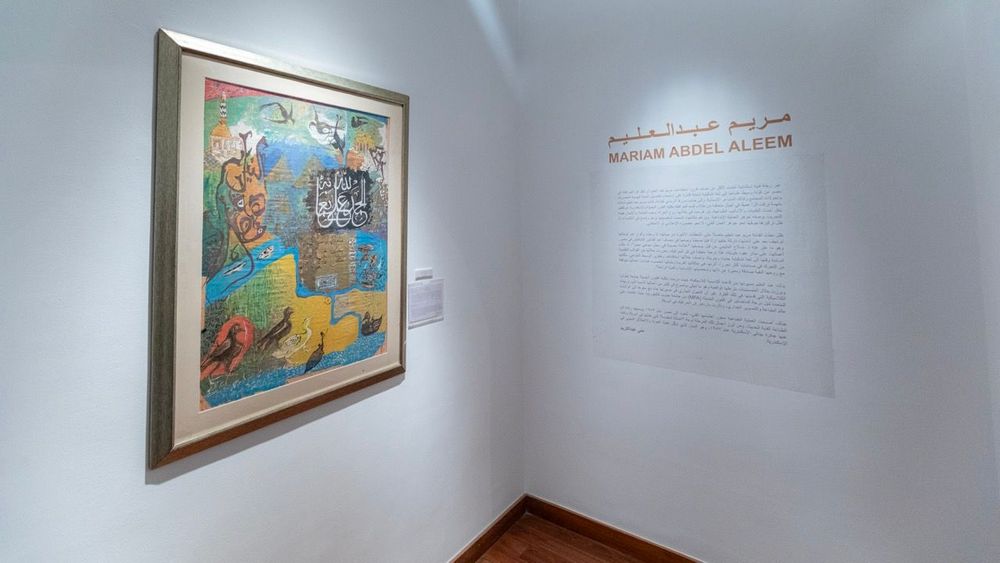
Through an exceptional artistic journey that extended for more than half a century, Mariam Abdel Aleem succeeded in transforming graphic art in Egypt from a purely reproductive printing medium into a comprehensive visual language capable of embracing the details of everyday Egyptian life, social transformations, and human emotions. Alongside her pioneering role as an artist, Abdel Aleem was an inspiring professor who left a profound impact on successive generations of students in the Graphic Department at the Faculty of Fine Arts in Alexandria. She did not merely transmit the latest printing techniques and methods; she instilled in her students a spirit of boldness, a love of materials, and faith in experimentation as the essence of the creative process. Despite her stature, her personality was marked by a clear modesty toward the spotlight; her focus remained directed toward the essence of artistic work rather than its media or celebratory presence. Her creative output continued until the very last moments of her life; she passed away while the colors of her final paintings had not yet dried on her fingertips, leaving behind a vast artistic legacy that placed her among the most important visual artists in Egypt. This was expressed by Dr. Salah El-Meligy, who described her as “a luminous sign in the record of Egypt’s creators,” noting that her works over many decades represented a true qualitative leap in graphic art. She liberated it from the prevailing traditional molds and developed a new and daring visual language through which she continued to explore and expand the printed medium, enabling her to move within more liberated spaces—enriched by her unique talents and fertile imagination—so that her works became aligned with her pure spirit, sincere and expressive of her human and artistic character. The mural The Egyptian Woman (84 cm × 2.5 m) is considered one of the most important works of this period. It presents a rich panoramic vision of the role of women across the ages, in a style reminiscent of ancient Egyptian murals. Abdel Aleem transformed the pictorial space into a continuous visual narrative in which daily scenes appear side by side without divisions, making the Woman a collective presence in every detail of life. At one end of the mural appears the duality of Adam and Eve as the origin of the human story; however, Adam’s presence is marginal compared to Eve’s, in line with Abdel Aleem’s vision that grants Woman symbolic and actual centrality within the composition. Man is part of the story, but Woman carries its continuity. Woman is active—grinding, spinning, cooking, and caring for children—affirming her centrality in the social structure. The horizontal dimension of the mural conveys a sense of movement, time, and continuity—an idea that preoccupied Abdel Aleem for a long time. The wheel motif recurs in many of her works, whether as the wheel of daily life or, in the Industrial Revolution series, as a gear form. This work was executed using silk-screen printing, and she was the first to introduce silk-screen printing into artistic practice in Faculties of Fine Arts after her return from her scholarship in 1959. She contributed to establishing the Printmaking Department at the Faculty of Fine Arts in Alexandria and founded a distinctive artistic school, as recounted by her daughter, the artist Zeinab El-Demerdash. She relied on large printed areas reaching two meters or more, at a time when traditional academic schools favored small formats—a direction inspired by her American experience. She also introduced relief printing into Egyptian art faculties for the first time using large-scale wooden blocks. The techniques she employed throughout her artistic experiments varied between lithography, silkscreen, linocut, relief and intaglio printing, in addition to mixed media, collage, and photo-sensitization. She excelled in combining more than one technique within a single work, achieving visual harmony between texture and symbol. Under the title “The Form of Meaning,” Mokhtar El-Attar wrote about the uniqueness of Abdel Aleem’s graphic experience in Al-Musawwar: “She had to ‘rationalize’ graphic formulation methods at the Faculty of Fine Arts… She introduced new means, combining silkscreen printing with photo-sensitization. She created zinc plates after cutting them into multiple parts, engraving them sometimes in intaglio and sometimes in relief, to avoid the appearance of an illusory line separating the drawn elements… This granted her creativity a realistic and poetic flavor—felt but unseen. Thus, craftsmanship served to perfect the formulation of meaning, not craftsmanship for its own sake.” Her works passed through thematic stages that paralleled transformations in Egypt and the Arab region, including a phase of social documentation and the Industrial Revolution during the era of Gamal Abdel Nasser. She depicted scenes from popular life such as the watermelon seller, the licorice seller, and secondary-school girls. She once spoke about the diversity of her subjects: “The surrounding events had a great effect on shaping them. From these events came the stages that began with my influence by the Egyptian street and what it contains of carts, humans, animals, and the wheel of life—from morning to evening. Thus, the wheel played a major role in building my works during the first half of the 1960s and then the second half, followed by political events from the industrial revolution to women entering elections and joining the political field, then Post -6-Day-War (June of 1967). Despite obtaining her PhD from the University of California, her attachment to Egyptian roots remained evident, as noted by Dr. Ahmed Nawar, who affirmed that she “did not drift into postmodern trends, but maintained familiar symbols with which the viewer interacts and finds himself.” Her vision of artistic belonging to roots and heritage was articulated in a lecture titled “Heritage and Contemporary Vision… Globalization Civilization and the Return to Heritage,” where she stated: “Our young intellectuals and artists must draw from their heritage and civilization, preserving the influence of their beliefs and traditions, and developing their thought, art, and conscience from the history, heritage, and authenticity of their land and civilization, without being influenced by or importing a new art and thought devoid of roots and heritage.” This vision, both artistic and intellectual, was adopted all the way by the artist, hence the frequent presence of pyramids using it as a symbol of civilization, continuity, and eternity, in the face of globalization and cultural alienation. The Sufi phase, during the 1970s and 1980s, represents one of the most important chapters of Abdel Aleem’s experience, especially after performing the pilgrimage in 1969 and her repeated visits to the Holy Land. This was reflected in her choice of subjects and her use of Qur’anic verses, the Divine Name, and motifs of peace and Divine awe in works, marked by profound inner purity. She expressed this by saying: “These awe-inspiring experiences had a great impact on the choice of themes and the artistic construction of the work, in the use of writing for its beauty and expressive power.” This spiritual tendency deepened during her period of secondment in Saudi Arabia (1975–1980), and also with the experience of loss following the death of her son Zuhair, resulting in the series Elegies for Zuhair as an emotional climax in her career. Arabic calligraphy became a principal feature in many works of this phase, used as a visual element rather than bound by strict traditional rules, but molded to serve the visual composition. Sufism does not appear as a direct subject, but as a general feel manifested in the idea of passage, purification, and the search for meaning beyond the apparent. As Mokhtar El-Attar noted: “The Sufi content in Abdel Aleem’s work does not spread through religious words arranged in formations; words are ultimately lines and shapes with visual value for those who do not read or grasp their meaning. They blend with symbolic forms, producing a kind of evocative ambiguity—like barren rocks in a distant desert, or primitive totems that have lost their origins yet retain their ancient magic. Though these compositions rest on artistic considerations and long experience, they reveal the artist’s estrangement in a world where dream and reality merge, drawing the viewer closer, after a moment of contemplation.” For Abdel Aleem, the artwork is a message to the viewer arising from psychological thought and the creation of dreams and events, intersecting—according to her—with Freud’s theory of transforming the unconscious into consciousness, and the personal into the universal. Hence, her paintings in some phases appear surreal; artworks, like dreams, are a form of release and liberation of thoughts and emotions through the unconscious in the creative process, being transformed into a painting of symbolic signs containing formal and chromatic elements. This perhaps explains why her works create a state between the earthly and the metaphysical, as if suspended between two worlds—read not as a single scene but as an open field of meaning in which times and layers coexist between myth, history, heritage, religion, and daily life. In the 1990s, her paintings were charged with scenes and elements bearing multiple connotations: black birds symbolized terrorism and death, white birds peace, and fish growth, goodness, and the pulse of the Nile. Her works then strongly engaged with many Arab causes. Among her works of this period is Life on the Riverbank, acrylic on papyrus, built on a horizontal narrative. The river becomes a path of life and memory, while pyramids and architecture coexist with birds and fish. The choice of acrylic on papyrus is not merely material, but reflects her awareness of material as a cultural medium evoking civilizational memory. Throughout her journey, she did not confine herself to a single creative product nor cease experimenting. She produced a distinctive artwork on a hand-woven loom rug and later created artist books, combining drawing, collage, and printmaking in an innovative conceptual format. Each of her works calls for a separate reading; they are marked by technical creativity, comprehensiveness of formal structure, and depth of content and themes charged with emotion and symbolism that engage the viewer and penetrate beyond the surface into the depths of the psyche. Throughout her rich journey, Mariam Abdel Aleem opened herself to various artistic schools between Realism and Expressionism. Her personality, imbued with Sufism and spirituality, endowed her creativity with a unique state of sincerity and authenticity. Thus, this exhibition stands as a celebration of her prolific history and distinguished achievements as a true pioneer, at the forefront of graphic artists in particular and at the heart of Egypt’s creative scene and cultural memory in general. Mona Abdel Karim
Exhibition Details
Status
PAST
Duration
15 DAYS
Participating Artists
1
Featured Works
28
Installation Views
Inquire About This Exhibition
For additional information, private viewing appointments, or inquiries about available works, please contact our gallery team.