Into The Depth
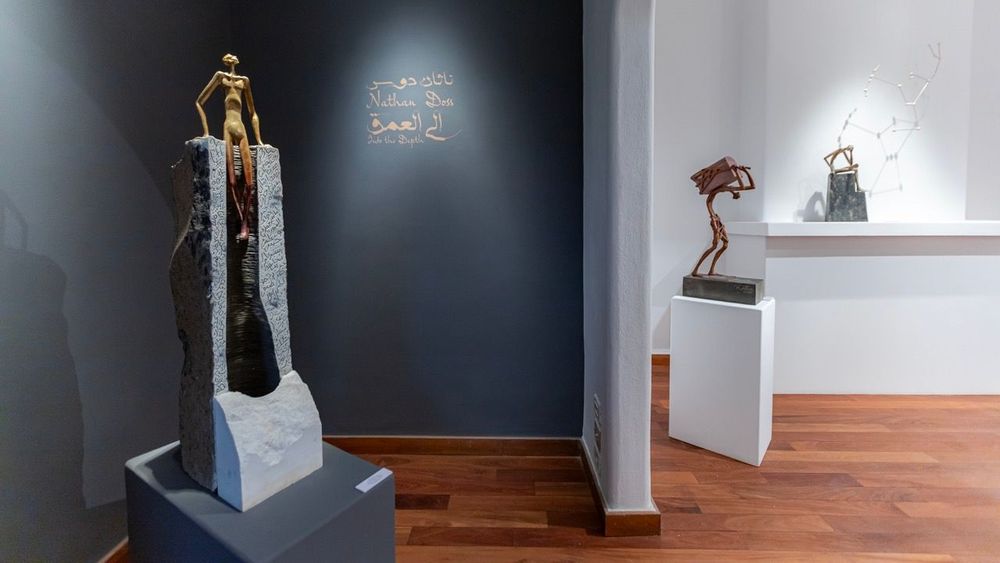
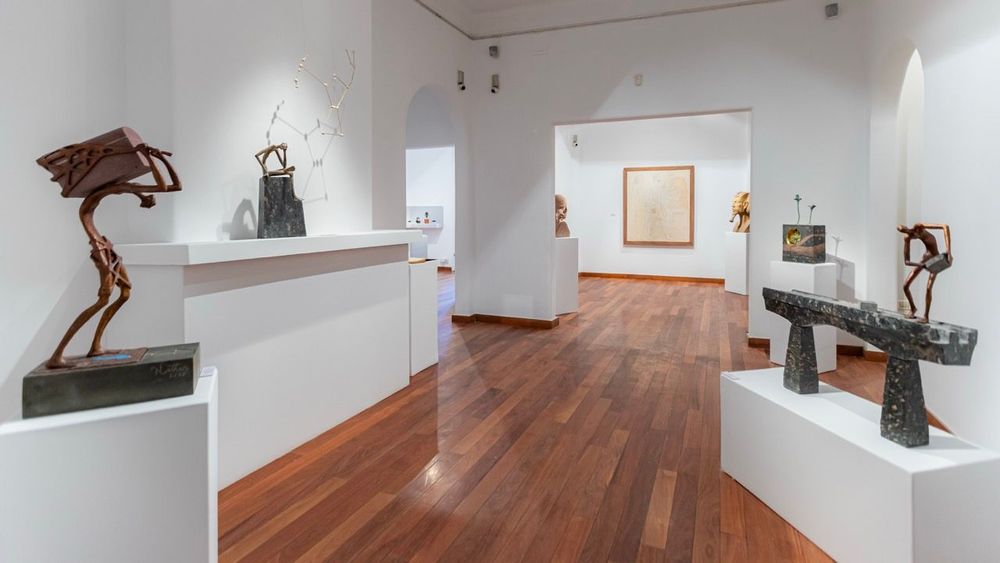
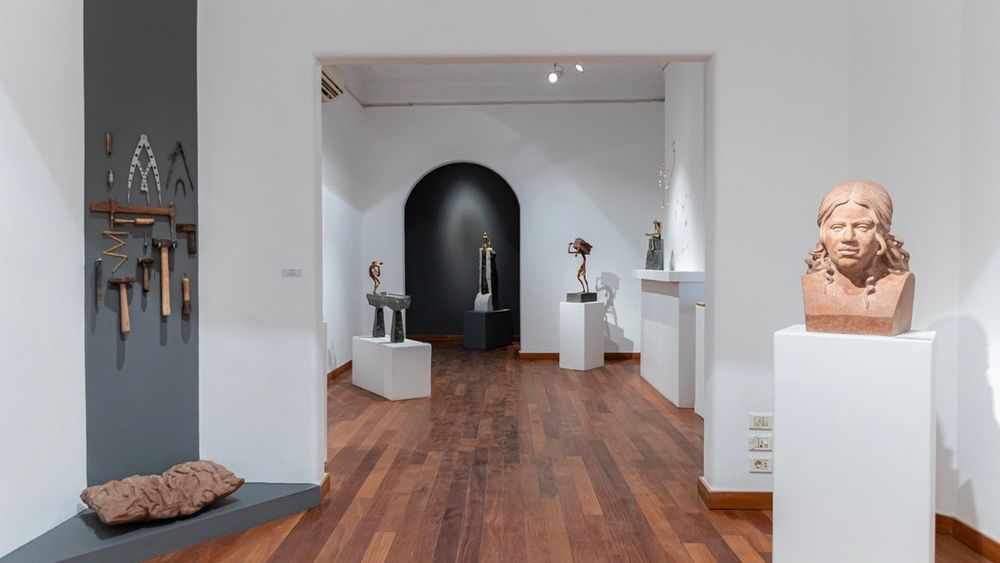
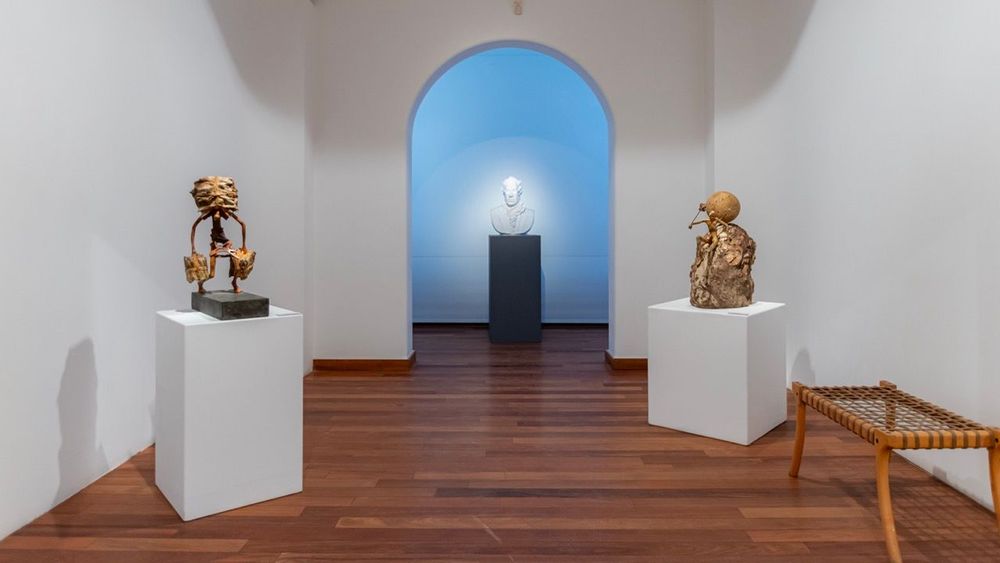
As is often the case in Nathan’s work, he reminds us of the cultural and civilizational continuity linking him to his ancient Egyptian ancestors. The direct reference to Akhenaten appears as a symbol of rebellion against prevailing ideas, suggesting that depth also involves questioning accepted assumptions.In choosing the title “Into the Depth” for his current exhibition at Zamalek Art Gallery, the artist Nathan Doss moves beyond the immediacy of the present moment toward a philosophical vision that has long shaped the direction of his artistic practice. Rather than presenting isolated works, the artist weaves together an interconnected symbolic system in which sculpture becomes a medium for reflecting on the paths of human inquiry and struggle. The exhibition begins with the idea of the duality of good and evil. Human beings are neither purely good nor purely evil; rather, they are a mixture of contradictions, oscillating between light and darkness. This idea becomes visible in the work “The Contradictions,” where a figure emerges from deep darkness to face himself in a mirror, discovering within an enduring desire to reach the light. Light—or enlightenment—stands as the alternative to darkness and ignorance. In “Cultivating the Mind,” the folds of the brain appear like cracked land, where ideas grow like plants. This visual metaphor suggests that a mind left uncultivated by constructive ideas will inevitably produce superstition and destructive thinking. Nathan translates these contradictions visually through the duality of surface and depth. The surface represents what is familiar and ordinary, while depth points toward truth and knowledge. In “Existentialism,” stone transforms into an inner space that contains the human figure. Here, the person does not merely stand before the stone but inhabits it, carving into it to discover jewels that symbolize knowledge gradually revealed along a long path of discovery. In “Diving into the Depths,” the paradox appears between those who remain within the safety of comfort and those who dare to descend into the depths in search of pearls. The figure sits relaxed beneath an umbrella atop the stone mass, as if inhabiting a zone of stability and ease, facing neither danger nor effort. This calm posture suggests a superficial satisfaction with what is readily available. The work raises a question: should we remain seated in safety beneath the umbrella, or venture into the depths in search of pearls? In “The Truth,” the artist grants the viewer’s eye the power to penetrate the rock and see the gem before the figure inside the work can perceive it, reminding us that truth is not a ready-made given but the result of persistent excavation and effort. In “The Seed,” a fetus and a seed appear deep within the earth while two plants grow on the surface. This image suggests that life does not move in a single direction but unfolds along two parallel paths: a hidden internal growth within the depths and a visible external growth above the surface. With every small beginning lies the potential for a complete life project, and its realization depends upon the surrounding environment and care. Looking across the works, we notice that the circle repeatedly appears as a unifying symbolic form—in “The Seed,” “Diving into the Depths,” “The Truth,” and others. The circle, with its connotations of completeness and continuity, points toward life itself. It becomes a visual womb embracing the fetus or the jewels that stand as equivalents of truth. At the same time, the circle functions as a window through which the viewer can see what the protagonist within the work cannot, becoming a second eye that reveals the hidden interior. The exhibition also proposes a vision of human struggle as a fundamental condition of existence, as seen in works such as “Sisyphus” and “Chosen ignorance.” In his contemporary interpretation of the myth of Sisyphus, the artist does not simply evoke the symbol of eternal torment but connects it with the culture of our time: suffering becomes a scene shared on social media, as if what matters most today is visibility and attention rather than the act itself. This historical dimension is further reinforced in a mural where the artist depicts himself carving Akhenaten while his wife stands behind him in support. This scene recalls the sacred marital partnership depicted in ancient Egyptian art—seen in statues such as Ramses II and Queen Nefertari, one of the most celebrated love stories of ancient Egypt, as well as Rahotep and Nofret, among others—where man and woman appear as partners in life. Here, history becomes a living extension of both personal and collective memory, and a source for understanding the contemporary value of partnership, love, and mutual support. This civilizational continuity intersects with a present-day human dimension through the artist’s celebration of the wife as companion and source of comfort, whether in the granite sculpture dedicated to her or in the work “The Pillow,” where the hardness of stone transforms into a symbol of rest and serenity. In this way, the exhibition connects ancient Egyptian teachings about the sanctity of marriage with a contemporary understanding that values partnership over dominance. Material also plays a crucial role in deepening these meanings. Granite becomes a symbol of permanence, antiquity, and solidity, standing in contrast to the fragile human body seeking discovery. In “The Pillow,” Nathan chose Hurghada granite—the same stone used for his wife’s sculpture—to reinforce the idea of the wife as comfort and companionship. In this exhibition, Nathan also embarks on a new experiment with diorite, which he describes as one of the hardest and most challenging stones known to sculpture. From it he presents an extremely small work—a frog measuring no more than two by three centimeters—yet one that carries symbolic meanings far beyond its modest scale. His choice of this material creates a subtle dialogue with ancient Egyptian heritage, particularly the famous diorite statue of Khafre, one of the most significant works ever carved from this formidable stone. Through this choice, the artist extends an invisible thread connecting him to this ancient legacy, offering a tribute to the technical mastery of the ancient Egyptian sculptor in shaping such a demanding material. The frog itself also carries symbolic significance related to leaping and transformation. Nathan describes his relationship with materials as a series of leaps and discoveries. His journey began with fired clay, then moved through various materials such as fiberglass, granite, and bronze, eventually arriving at diorite in this exhibition as a new stage in his ongoing experimentation. His fascination with the material also extends into his sculptural series “Tools and Ritual Forms,” consisting of around fifty small pieces. Through them, the artist evokes the earliest relationship between humans, the earth, and the tool. Inspired by objects and talismans from prehistoric and Stone Age cultures, these works embody both precision of craftsmanship and density of meaning. Despite their small scale, the hardness of diorite makes shaping them extremely demanding, turning the process itself into a rediscovery of the material through careful artistic treatment. With the diversity of ideas presented in “Into the Depth,” the exhibition ultimately places us face to face with ourselves. The human journey unfolds through choices, through the ideas we cultivate and the actions we perform. It leaves us suspended between those who remain in the shadows and those who seek knowledge and truth within the depths, moving closer to what lies hidden beneath the surface. In this sense, the artist connects psychological depth, civilizational depth, and mythological depth, transforming sculpture into a space for contemplation of the human experience as an open-ended journey—one that never reaches a final answer but continually invites us to dive deeper… into the depth. Mona Abdel Karim
March 29 — April 12, 2026
Curatorial Statement
As is often the case in Nathan’s work, he reminds us of the cultural and civilizational continuity linking him to his ancient Egyptian ancestors. The direct reference to Akhenaten appears as a symbol of rebellion against prevailing ideas, suggesting that depth also involves questioning accepted assumptions.In choosing the title “Into the Depth” for his current exhibition at Zamalek Art Gallery, the artist Nathan Doss moves beyond the immediacy of the present moment toward a philosophical vision that has long shaped the direction of his artistic practice. Rather than presenting isolated works, the artist weaves together an interconnected symbolic system in which sculpture becomes a medium for reflecting on the paths of human inquiry and struggle. The exhibition begins with the idea of the duality of good and evil. Human beings are neither purely good nor purely evil; rather, they are a mixture of contradictions, oscillating between light and darkness. This idea becomes visible in the work “The Contradictions,” where a figure emerges from deep darkness to face himself in a mirror, discovering within an enduring desire to reach the light. Light—or enlightenment—stands as the alternative to darkness and ignorance. In “Cultivating the Mind,” the folds of the brain appear like cracked land, where ideas grow like plants. This visual metaphor suggests that a mind left uncultivated by constructive ideas will inevitably produce superstition and destructive thinking. Nathan translates these contradictions visually through the duality of surface and depth. The surface represents what is familiar and ordinary, while depth points toward truth and knowledge. In “Existentialism,” stone transforms into an inner space that contains the human figure. Here, the person does not merely stand before the stone but inhabits it, carving into it to discover jewels that symbolize knowledge gradually revealed along a long path of discovery. In “Diving into the Depths,” the paradox appears between those who remain within the safety of comfort and those who dare to descend into the depths in search of pearls. The figure sits relaxed beneath an umbrella atop the stone mass, as if inhabiting a zone of stability and ease, facing neither danger nor effort. This calm posture suggests a superficial satisfaction with what is readily available. The work raises a question: should we remain seated in safety beneath the umbrella, or venture into the depths in search of pearls? In “The Truth,” the artist grants the viewer’s eye the power to penetrate the rock and see the gem before the figure inside the work can perceive it, reminding us that truth is not a ready-made given but the result of persistent excavation and effort. In “The Seed,” a fetus and a seed appear deep within the earth while two plants grow on the surface. This image suggests that life does not move in a single direction but unfolds along two parallel paths: a hidden internal growth within the depths and a visible external growth above the surface. With every small beginning lies the potential for a complete life project, and its realization depends upon the surrounding environment and care. Looking across the works, we notice that the circle repeatedly appears as a unifying symbolic form—in “The Seed,” “Diving into the Depths,” “The Truth,” and others. The circle, with its connotations of completeness and continuity, points toward life itself. It becomes a visual womb embracing the fetus or the jewels that stand as equivalents of truth. At the same time, the circle functions as a window through which the viewer can see what the protagonist within the work cannot, becoming a second eye that reveals the hidden interior. The exhibition also proposes a vision of human struggle as a fundamental condition of existence, as seen in works such as “Sisyphus” and “Chosen ignorance.” In his contemporary interpretation of the myth of Sisyphus, the artist does not simply evoke the symbol of eternal torment but connects it with the culture of our time: suffering becomes a scene shared on social media, as if what matters most today is visibility and attention rather than the act itself. This historical dimension is further reinforced in a mural where the artist depicts himself carving Akhenaten while his wife stands behind him in support. This scene recalls the sacred marital partnership depicted in ancient Egyptian art—seen in statues such as Ramses II and Queen Nefertari, one of the most celebrated love stories of ancient Egypt, as well as Rahotep and Nofret, among others—where man and woman appear as partners in life. Here, history becomes a living extension of both personal and collective memory, and a source for understanding the contemporary value of partnership, love, and mutual support. This civilizational continuity intersects with a present-day human dimension through the artist’s celebration of the wife as companion and source of comfort, whether in the granite sculpture dedicated to her or in the work “The Pillow,” where the hardness of stone transforms into a symbol of rest and serenity. In this way, the exhibition connects ancient Egyptian teachings about the sanctity of marriage with a contemporary understanding that values partnership over dominance. Material also plays a crucial role in deepening these meanings. Granite becomes a symbol of permanence, antiquity, and solidity, standing in contrast to the fragile human body seeking discovery. In “The Pillow,” Nathan chose Hurghada granite—the same stone used for his wife’s sculpture—to reinforce the idea of the wife as comfort and companionship. In this exhibition, Nathan also embarks on a new experiment with diorite, which he describes as one of the hardest and most challenging stones known to sculpture. From it he presents an extremely small work—a frog measuring no more than two by three centimeters—yet one that carries symbolic meanings far beyond its modest scale. His choice of this material creates a subtle dialogue with ancient Egyptian heritage, particularly the famous diorite statue of Khafre, one of the most significant works ever carved from this formidable stone. Through this choice, the artist extends an invisible thread connecting him to this ancient legacy, offering a tribute to the technical mastery of the ancient Egyptian sculptor in shaping such a demanding material. The frog itself also carries symbolic significance related to leaping and transformation. Nathan describes his relationship with materials as a series of leaps and discoveries. His journey began with fired clay, then moved through various materials such as fiberglass, granite, and bronze, eventually arriving at diorite in this exhibition as a new stage in his ongoing experimentation. His fascination with the material also extends into his sculptural series “Tools and Ritual Forms,” consisting of around fifty small pieces. Through them, the artist evokes the earliest relationship between humans, the earth, and the tool. Inspired by objects and talismans from prehistoric and Stone Age cultures, these works embody both precision of craftsmanship and density of meaning. Despite their small scale, the hardness of diorite makes shaping them extremely demanding, turning the process itself into a rediscovery of the material through careful artistic treatment. With the diversity of ideas presented in “Into the Depth,” the exhibition ultimately places us face to face with ourselves. The human journey unfolds through choices, through the ideas we cultivate and the actions we perform. It leaves us suspended between those who remain in the shadows and those who seek knowledge and truth within the depths, moving closer to what lies hidden beneath the surface. In this sense, the artist connects psychological depth, civilizational depth, and mythological depth, transforming sculpture into a space for contemplation of the human experience as an open-ended journey—one that never reaches a final answer but continually invites us to dive deeper… into the depth. Mona Abdel Karim
Exhibition Details
Status
PAST
Duration
14 DAYS
Participating Artists
1
Featured Works
49
Installation Views
Inquire About This Exhibition
For additional information, private viewing appointments, or inquiries about available works, please contact our gallery team.