Mostafa Abdel Moity 2026
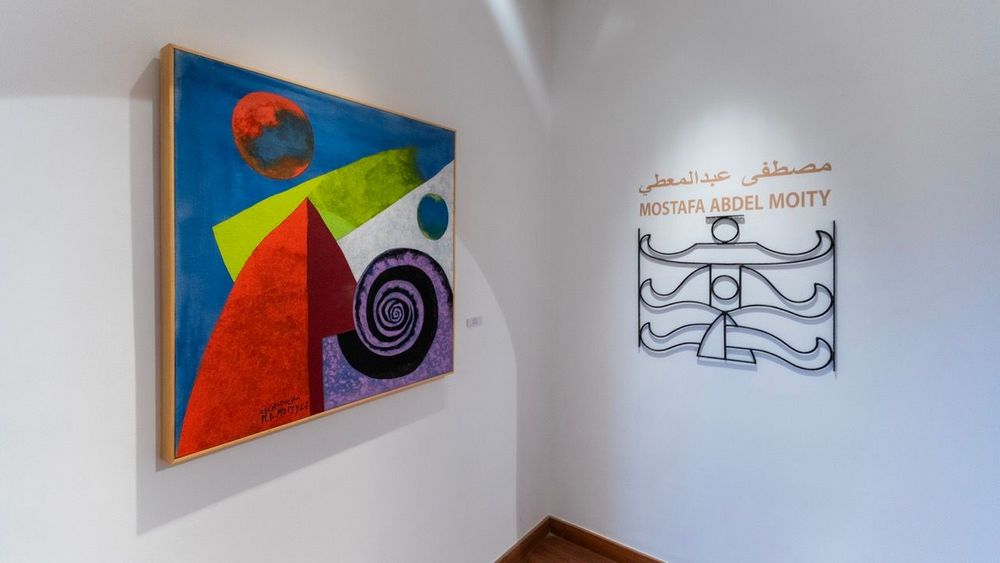
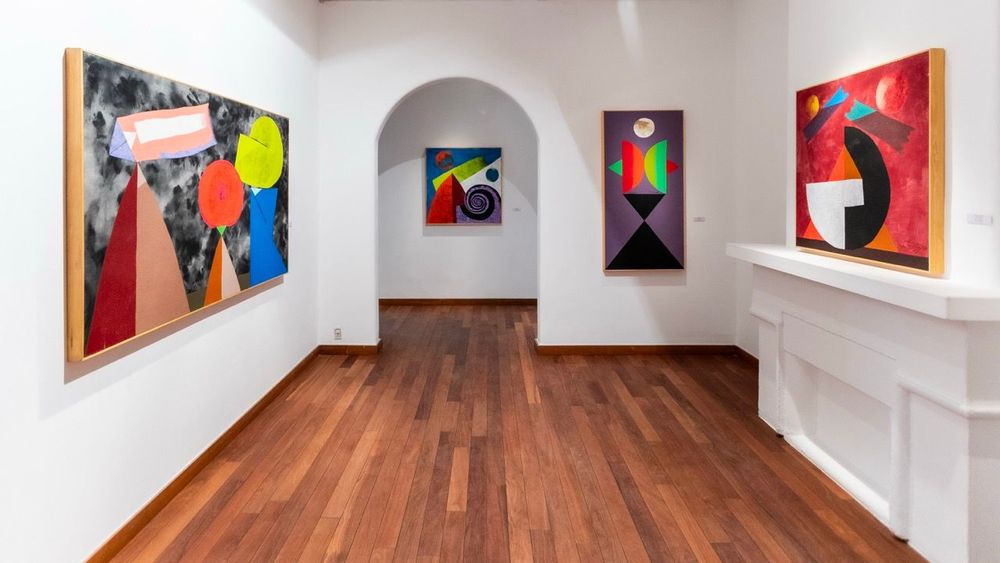
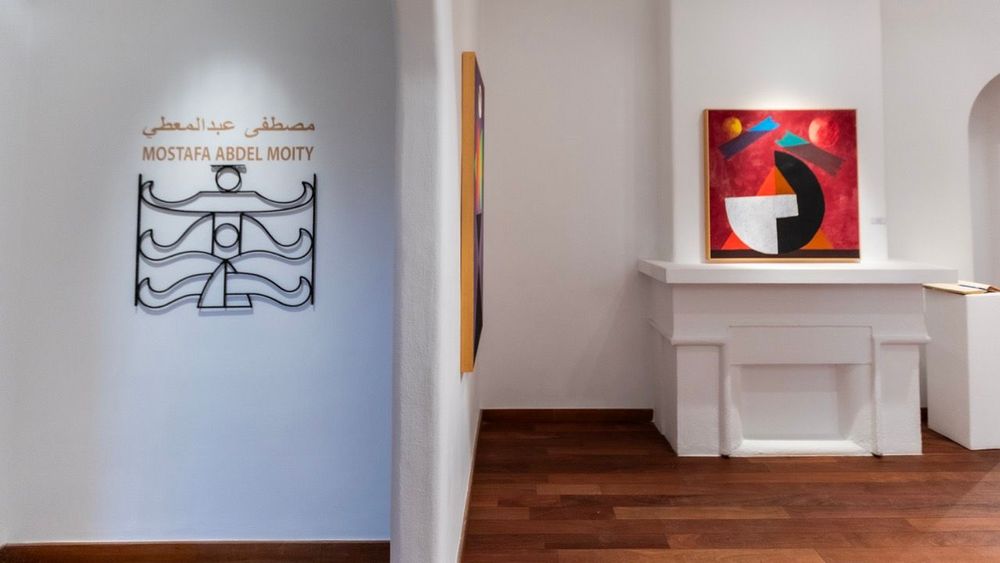
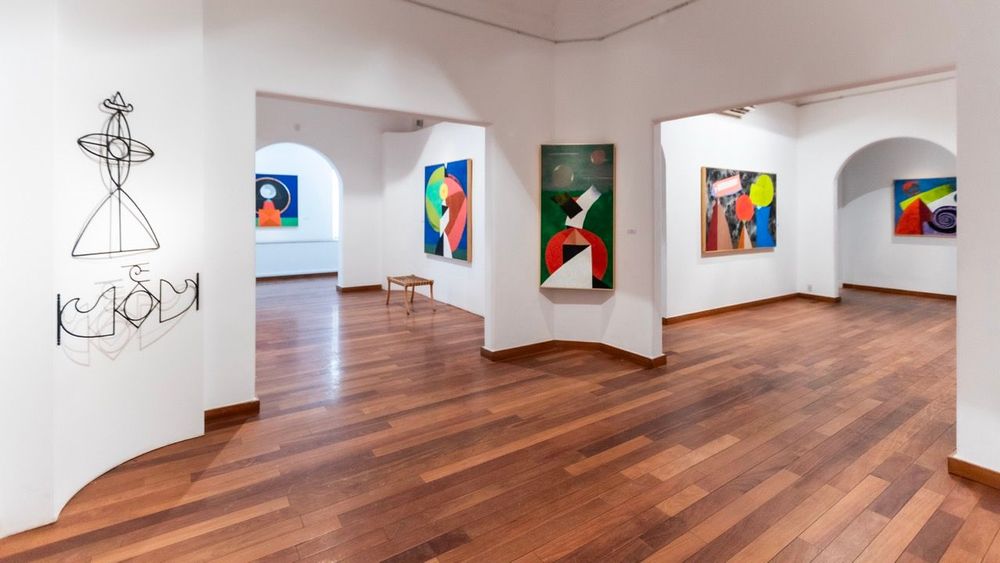
Mostafa Abdel-Moity… The Magic of Color and the Philosophy of Form By Mohamed Salmawy Mostafa Abdel-Moity is not among those who produce works for rapid “visual consumption”. His paintings invite careful looking; they urge contemplation and thought. In an age dominated by the fast image—on the internet, on television screens, and even within galleries—Mostafa Abdel-Moaty’s experience stands as a quiet form of resistance, affirming that true art is not something you merely see, but something you must think about. From here, its value in our breathless contemporary life becomes clear. He is an artist who wagers on intellectual depth, listens attentively to an inner call, and ultimately forges a visual language that belongs to no one but himself. The artistic journey of Mostafa Abdel-Moity extends over more than six decades, beginning with his first exhibition at the Freedom Cultural Palace in Alexandria—his birthplace and chosen home. From his earliest beginnings, he was preoccupied with the question of identity as part of the “Experimentalists Group,” which he co-founded in 1958 with his fellow Alexandrians Saeed El-Adawy and Mahmoud Abdallah. This was the period of cultural renaissance in Egypt following the 1952 Revolution—a time of progress and modernity, and of asserting national identity after liberation from colonialism. The aim of the Experimentalists was to “create an Egyptian art that unites modernity with ancient Egyptian civilization.” From this point, Mostafa Abdel-Moaty set out to become a modern artist with deeply rooted Egyptian characteristics, succeeding in establishing a distinctive school of his own based on a rich and profound dialogue between abstract geometric forms drawn from the symbols of his ancestors’ ancient civilization—foremost among them the triangle, the square, and the circle. Some might imagine that a dialogue limited to three elements would eventually be exhausted, but herein lies the greatness of Mostafa Abdel-Moity’s art. He has succeeded in making his chosen geometric forms speak in endless conversations whose aesthetic beauty grows and whose meanings deepen over the decades. This exhibition adds a new dimension to that ongoing dialogue, opening renewed artistic horizons for the viewer. The geometric forms in Mostafa Abdel-Moity’s work do not stop at their decorative aspect; rather, they constitute an alphabet of a unique visual philosophy. They carry within them questions of existence and creativity, transforming the brush into a tool for cosmic queries. Through his colors and compositions, the artist establishes an aesthetic system founded on balance between modern mathematics and inherited spirituality—a visual equation searching for harmony between the individual and the universe. In his artistic project, Mostafa Abdel-Moity proceeds from the conviction that the human being is a hypothetical mathematical equation. This equation is not merely a metaphor; it is the core of his conception of the universe—a universal law that governs planets and galaxies, as well as human existence. Hence, his works strive toward this cosmic balance. In doing so, he turns away from superficial romanticism, aiming instead at a rigorous cognitive dimension. He does not seek the emotional sentiments that usually appeal to the masses, but rather digs into the structural relationships that bind humanity to the universe, turning his paintings into rational meditations on the chaos of existence—attempts to subject it to a comprehensive aesthetic order. Every painting in this exhibition, as well as in more than forty previous exhibitions, shows that his geometric forms are not rigid shapes, but living entities that interact and harmonize within the frame of the canvas. The artist plays with color, space, form, and surface, transforming them into interrelated visual equations in which color becomes form, form becomes space, and so on, in an endless chain of possibilities. The eye of the exhibition’s visitor cannot miss the interaction within his paintings between ancient Egyptian heritage and contemporary visual language—not through the mere revival or borrowing of old symbols as static forms, but by reshaping them within the artist’s “aesthetic laboratory”. The pyramid in Mostafa Abdel-Moity’s paintings relinquishes its archaeological imagery to become a pure geometric being, part of a larger cosmic system. The architectural units of Hatshepsut’s temple at Deir el-Bahari inspire slender color planes that he liberates from the weight of the distant past, transforming them into free lines and shapes that float across the pictorial space in a contemporary manner. Even the spiral cone derived from the red royal crown undergoes visual transformation, adding to its historical origin, new cosmic connotations shaped by a modern, exploratory approach. This intelligent utilization of heritage, turns it from a static historical reserve into a living creative energy that enriches the present without constraining it. The ideolgy of the Experimentalists was that authenticity does not mean repeating what the ancients produced, and modernity does not mean severing ties with heritage. The three members adopted experimentation—enlightened by identity and modernity—as their methodology. Yet Mostafa Abdel-Moaty, while adhering to this ideolgy, follows a singular path of his own, proving that the greatest quality an artist can possess is the courage to carve out a personal path that resembles no one else’s. He has achieved this through a philosophy based on the fusion of reason and spirit, precise mathematics and Eastern spirituality, the authenticity of heritage and the boldness of contemporaneity—granting his work a depth that transcends time. In his latest exhibition, Mostafa Abdel-Moity presents the distilled essence of the intelectual artist who refuses to be merely a maker of pleasing, quickly difusing imagery. His paintings are cosmic metaphors that invite the viewer to contemplate their place within the vast universe, and the hidden relationships linking geometry and spirit on one hand, and past and future on the other. In every painting, Abdel-Moity reminds us that beauty, at its highest level, is an expression of truth—the truth humanity has sought since it first set foot on this earth—and affirms that truth may reveal itself through the magic of color and the philosophy of form before it ever speaks in the language of words. Mohamed Salmawy
January 11 — January 26, 2026
Curatorial Statement
Mostafa Abdel-Moity… The Magic of Color and the Philosophy of Form By Mohamed Salmawy Mostafa Abdel-Moity is not among those who produce works for rapid “visual consumption”. His paintings invite careful looking; they urge contemplation and thought. In an age dominated by the fast image—on the internet, on television screens, and even within galleries—Mostafa Abdel-Moaty’s experience stands as a quiet form of resistance, affirming that true art is not something you merely see, but something you must think about. From here, its value in our breathless contemporary life becomes clear. He is an artist who wagers on intellectual depth, listens attentively to an inner call, and ultimately forges a visual language that belongs to no one but himself. The artistic journey of Mostafa Abdel-Moity extends over more than six decades, beginning with his first exhibition at the Freedom Cultural Palace in Alexandria—his birthplace and chosen home. From his earliest beginnings, he was preoccupied with the question of identity as part of the “Experimentalists Group,” which he co-founded in 1958 with his fellow Alexandrians Saeed El-Adawy and Mahmoud Abdallah. This was the period of cultural renaissance in Egypt following the 1952 Revolution—a time of progress and modernity, and of asserting national identity after liberation from colonialism. The aim of the Experimentalists was to “create an Egyptian art that unites modernity with ancient Egyptian civilization.” From this point, Mostafa Abdel-Moaty set out to become a modern artist with deeply rooted Egyptian characteristics, succeeding in establishing a distinctive school of his own based on a rich and profound dialogue between abstract geometric forms drawn from the symbols of his ancestors’ ancient civilization—foremost among them the triangle, the square, and the circle. Some might imagine that a dialogue limited to three elements would eventually be exhausted, but herein lies the greatness of Mostafa Abdel-Moity’s art. He has succeeded in making his chosen geometric forms speak in endless conversations whose aesthetic beauty grows and whose meanings deepen over the decades. This exhibition adds a new dimension to that ongoing dialogue, opening renewed artistic horizons for the viewer. The geometric forms in Mostafa Abdel-Moity’s work do not stop at their decorative aspect; rather, they constitute an alphabet of a unique visual philosophy. They carry within them questions of existence and creativity, transforming the brush into a tool for cosmic queries. Through his colors and compositions, the artist establishes an aesthetic system founded on balance between modern mathematics and inherited spirituality—a visual equation searching for harmony between the individual and the universe. In his artistic project, Mostafa Abdel-Moity proceeds from the conviction that the human being is a hypothetical mathematical equation. This equation is not merely a metaphor; it is the core of his conception of the universe—a universal law that governs planets and galaxies, as well as human existence. Hence, his works strive toward this cosmic balance. In doing so, he turns away from superficial romanticism, aiming instead at a rigorous cognitive dimension. He does not seek the emotional sentiments that usually appeal to the masses, but rather digs into the structural relationships that bind humanity to the universe, turning his paintings into rational meditations on the chaos of existence—attempts to subject it to a comprehensive aesthetic order. Every painting in this exhibition, as well as in more than forty previous exhibitions, shows that his geometric forms are not rigid shapes, but living entities that interact and harmonize within the frame of the canvas. The artist plays with color, space, form, and surface, transforming them into interrelated visual equations in which color becomes form, form becomes space, and so on, in an endless chain of possibilities. The eye of the exhibition’s visitor cannot miss the interaction within his paintings between ancient Egyptian heritage and contemporary visual language—not through the mere revival or borrowing of old symbols as static forms, but by reshaping them within the artist’s “aesthetic laboratory”. The pyramid in Mostafa Abdel-Moity’s paintings relinquishes its archaeological imagery to become a pure geometric being, part of a larger cosmic system. The architectural units of Hatshepsut’s temple at Deir el-Bahari inspire slender color planes that he liberates from the weight of the distant past, transforming them into free lines and shapes that float across the pictorial space in a contemporary manner. Even the spiral cone derived from the red royal crown undergoes visual transformation, adding to its historical origin, new cosmic connotations shaped by a modern, exploratory approach. This intelligent utilization of heritage, turns it from a static historical reserve into a living creative energy that enriches the present without constraining it. The ideolgy of the Experimentalists was that authenticity does not mean repeating what the ancients produced, and modernity does not mean severing ties with heritage. The three members adopted experimentation—enlightened by identity and modernity—as their methodology. Yet Mostafa Abdel-Moaty, while adhering to this ideolgy, follows a singular path of his own, proving that the greatest quality an artist can possess is the courage to carve out a personal path that resembles no one else’s. He has achieved this through a philosophy based on the fusion of reason and spirit, precise mathematics and Eastern spirituality, the authenticity of heritage and the boldness of contemporaneity—granting his work a depth that transcends time. In his latest exhibition, Mostafa Abdel-Moity presents the distilled essence of the intelectual artist who refuses to be merely a maker of pleasing, quickly difusing imagery. His paintings are cosmic metaphors that invite the viewer to contemplate their place within the vast universe, and the hidden relationships linking geometry and spirit on one hand, and past and future on the other. In every painting, Abdel-Moity reminds us that beauty, at its highest level, is an expression of truth—the truth humanity has sought since it first set foot on this earth—and affirms that truth may reveal itself through the magic of color and the philosophy of form before it ever speaks in the language of words. Mohamed Salmawy
Exhibition Details
Status
PAST
Duration
15 DAYS
Participating Artists
0
Featured Works
0
Installation Views
Inquire About This Exhibition
For additional information, private viewing appointments, or inquiries about available works, please contact our gallery team.